This engaging resource pack combines our popular STEM Journal with hands-on investigations and experiments that explore the properties, cycles, and importance of water. Perfect for Key Stage 2 learners, children will conduct scientific investigations, explore the water cycle, and discover how water shapes our world while documenting their findings in their STEM Journal.
Included Resources +
This pack includes eight activity sheets with accompanying lesson plans and a STEM Journal for recording water investigations, observations, and scientific discoveries.
• STEM Journal — interactive notebook for recording water investigations, observations, and scientific discoveries
• Investigating The Water Cycle — explore evaporation, condensation, and precipitation through hands-on experiments
• Shaping The Land Investigation — discover how water erosion shapes landscapes and landforms
• Measuring Precipitation — build a rain gauge and track rainfall patterns
• Water Density Investigation — explore how salt water and fresh water have different densities
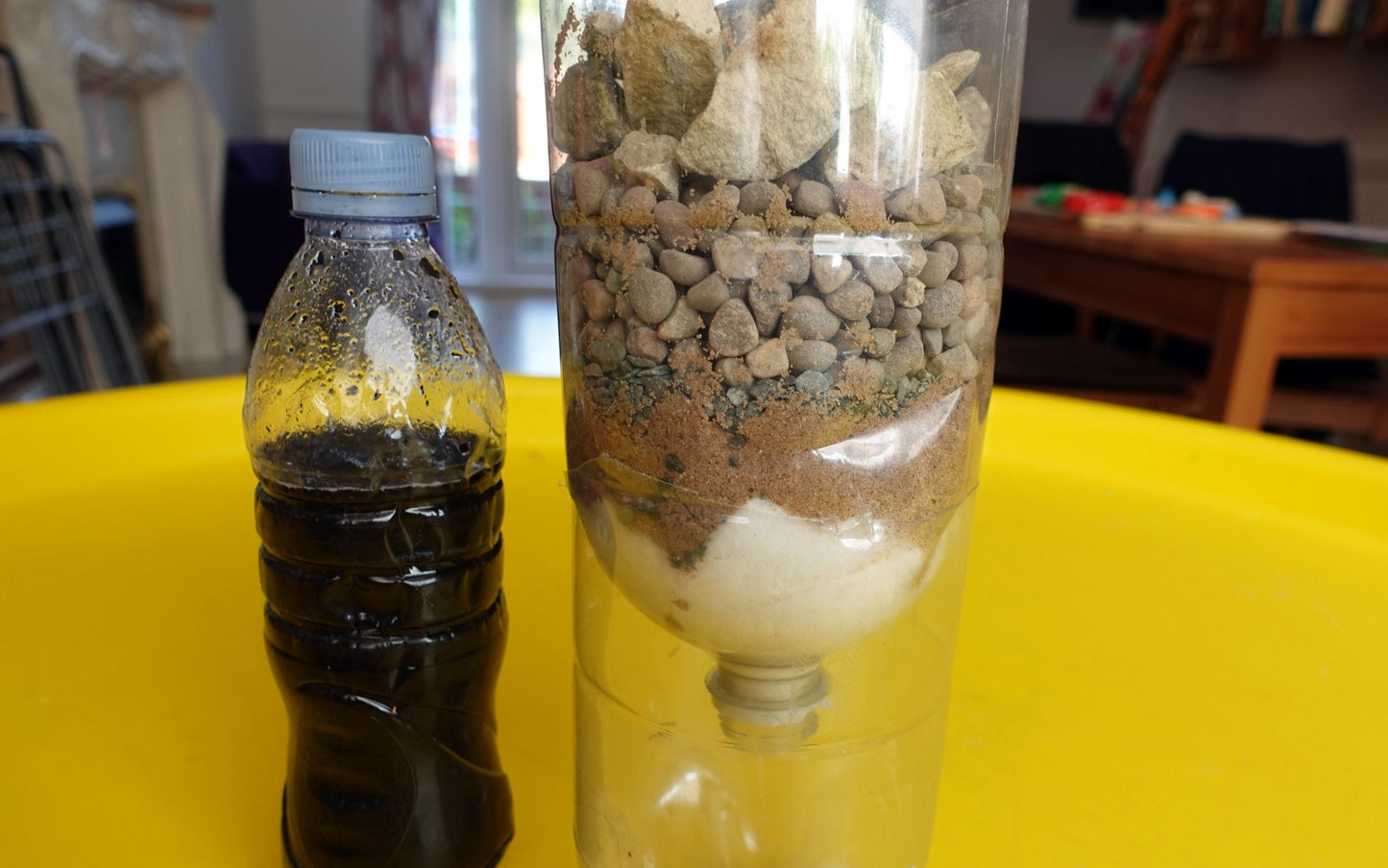
• Filtering Water — create a water filter and learn about water purification
• Melting Ice Investigation — investigate the properties of ice and factors affecting melting
• Body Of Water Field Trip — plan or conduct a visit to explore local rivers, lakes, or coastal areas
Key Details +
• Year Group: KS2 (ages 7–11)
• Key Stage: KS2
• Subject: Geography, Science
• Resource Type: Activity Sheets + Lesson Plans + STEM Journal
• Format: Instant PDF Download
• Number of Activities: 8
Curriculum Alignment +
Aligned to the KS2 Geography and Science National Curriculum. Geography coverage includes physical geography — the water cycle, rivers, and how water shapes the landscape through erosion and deposition. Science coverage links to Year 4 — states of matter (evaporation, condensation, and the water cycle) and properties of water. Develops scientific enquiry skills through hypothesis formation, investigation, and data recording. Cross-curricular links to environmental science (water purification, water as a precious resource) and outdoor learning (Body Of Water Field Trip).
Teaching Tips +
Filtering Water is the standout investigation — layer gravel, sand, and cotton wool in a plastic bottle to build a filter and test it with muddy water. Children are always amazed by the results and it opens up excellent discussion about clean water access globally. Water Density Investigation is visually striking — use food colouring in salt water and fresh water to make the density difference visible when layered carefully in a glass. Investigating The Water Cycle works brilliantly with a sealed plastic bag of water taped to a sunny window — children can observe evaporation and condensation over a few days. Body Of Water Field Trip pairs naturally with the Shaping The Land Investigation — visit a local river or stream and look for real evidence of erosion and deposition.