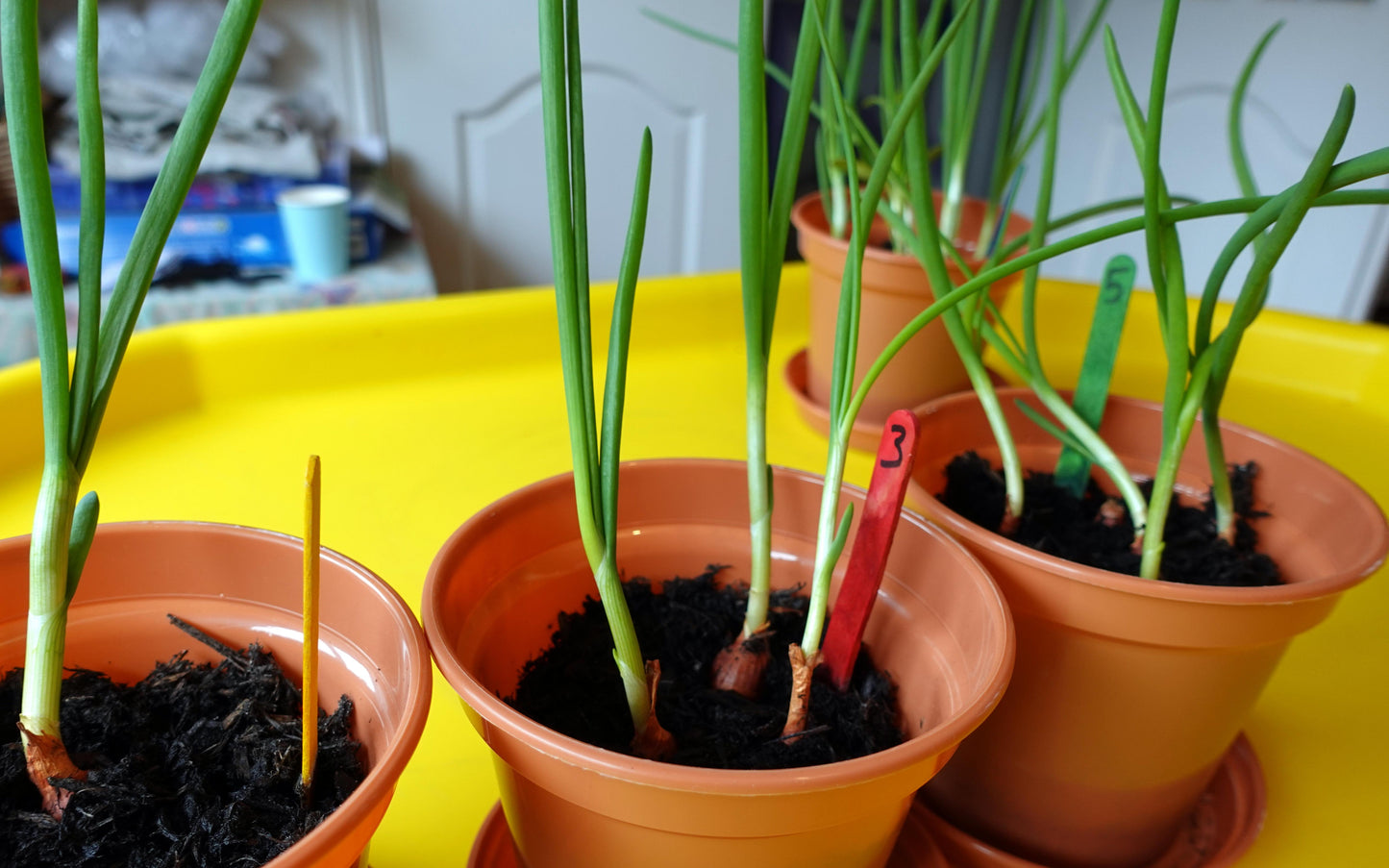
This engaging resource pack combines our popular STEM Journal with hands-on investigations that explore the essential conditions plants need for healthy growth. Perfect for Key Stage 2 learners, children will conduct scientific experiments to discover how water, light, space, and soil affect plant growth while documenting their botanical investigations in their STEM Journal.
Included Resources +
This pack includes six activity sheets with accompanying lesson plans and a STEM Journal for recording plant investigations, observations, and scientific findings across a full plant conditions unit.
• STEM Journal — interactive notebook for recording plant investigations, observations, and scientific findings
• Functions Of Plants — learn about the different parts of plants and what they do
• Absorbing Water Investigation — explore how plants take up water through their roots
• Plant Maze — investigate how plants grow towards light (phototropism)
• Seeds In Soil Investigation — discover how different soil types affect plant growth
• Plants Need Space Investigation — explore how spacing affects plant health and growth
Key Details +
• Year Group: Year 3 (ages 7–8)
• Key Stage: KS2
• Subject: Science
• Resource Type: Activity Sheets + Lesson Plans + STEM Journal
• Format: Instant PDF Download
• Number of Activities: 6
Curriculum Alignment +
Aligned to the Year 3 Science National Curriculum. Covers plants — identifying and describing the functions of different parts of flowering plants (roots, stem, leaves, and flowers), exploring the requirements of plants for life and growth (air, light, water, nutrients from soil, and room to grow), and investigating the way in which water is transported within plants. Develops scientific enquiry skills through fair testing, hypothesis formation, and long-term observation and data collection.
Teaching Tips +
Plant Maze is the standout investigation — place a seedling in a shoebox with a hole cut in one end and a series of internal card baffles; within a week children can observe the shoot bending towards the light through the maze. A genuinely memorable demonstration of phototropism. Absorbing Water Investigation works brilliantly with celery stalks in coloured water — results are visible within a few hours and children can cut the stem to see the coloured water inside. Seeds In Soil Investigation works best set up at the start of the unit with identical seeds in different soil types (compost, sand, clay, gravel) so children can observe growth differences over two to three weeks. Plants Need Space Investigation pairs naturally with a real school garden planting activity — sow seeds at different spacings and observe the results across the term.